Liverpool, United Kingdom
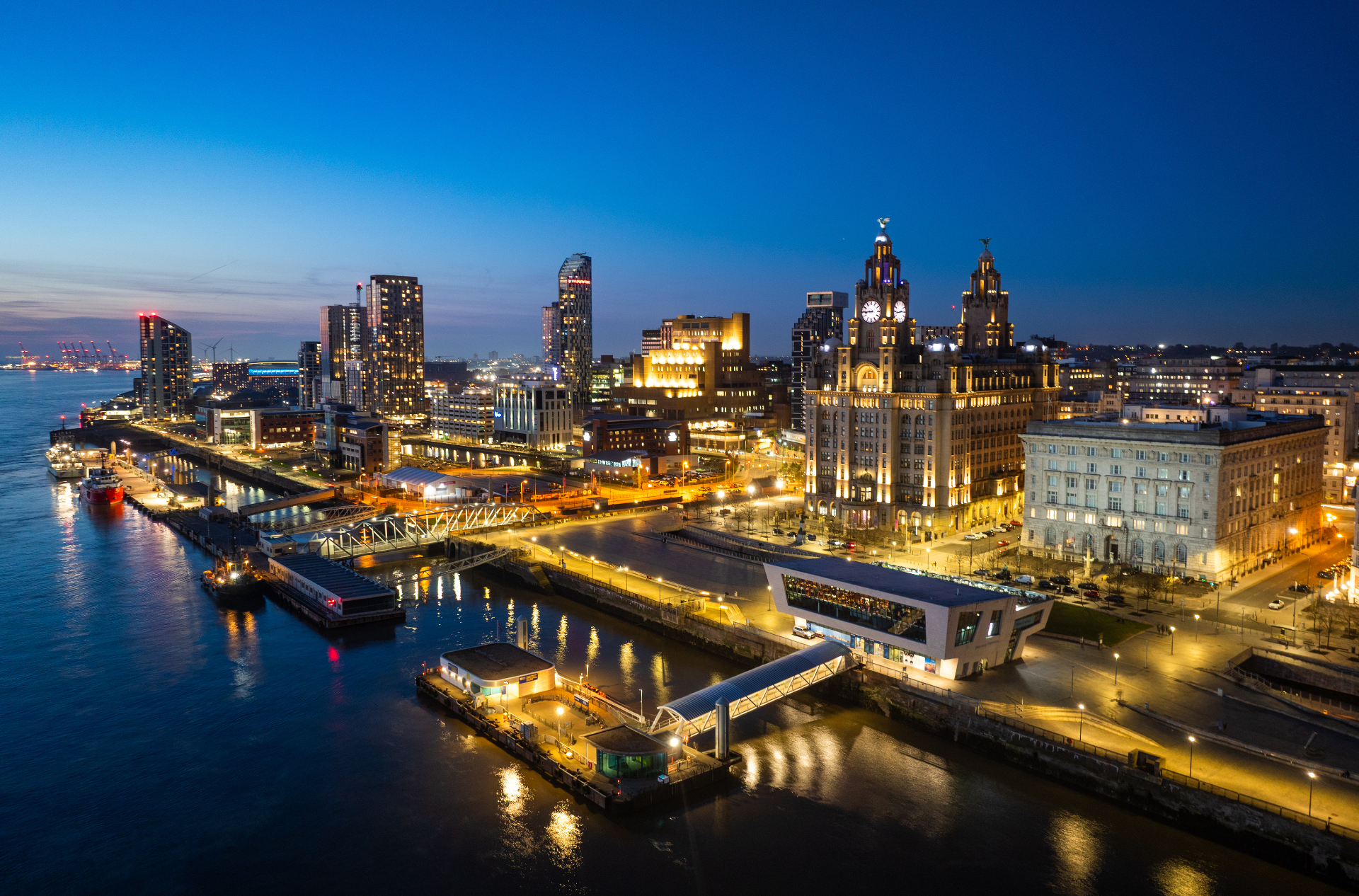 Image: Liverpool Pierhead and Waterfront

The city area was originally known as “Liuerpul” – also spelled “Livpul” - a name recorded as early as 1190 and again in King John’s 1207 charter. The original Letters Patent signed by King John still exists today in the collection of Liverpool City Council Libraries and Archives.
Liverpool sits on the river Mersey, forming the nucleus of a wider metropolitan area called Merseyside. The strategic position of the city on the Mersey estuary, opening onto the Irish Sea, allowed the city to grow rapidly after the creation of the first major dock in 1715. Through the 18th and 19th centuries, Liverpool grew to become one of the world’s most important ports, connecting Britain to North America, the Caribbean, Africa and other parts of the world.
Liverpool Pierhead and waterfront is dominated by three iconic buildings - The Royal Liver Building, The Cunard Building and Port of Liverpool Building - commonly known as The Three Graces. The Grade I listed Royal Liver Building is the jewel in crown of a city which has many architectural wonders. Atop are two 18 foot bird statues, Liver Birds called Bella and Bertie to be exact, watching over the city. The Liver Bird is the official symbol of Liverpool, featuring on the coat of arms and many buildings and monuments. It is legally protected as public property belonging to the municipality.
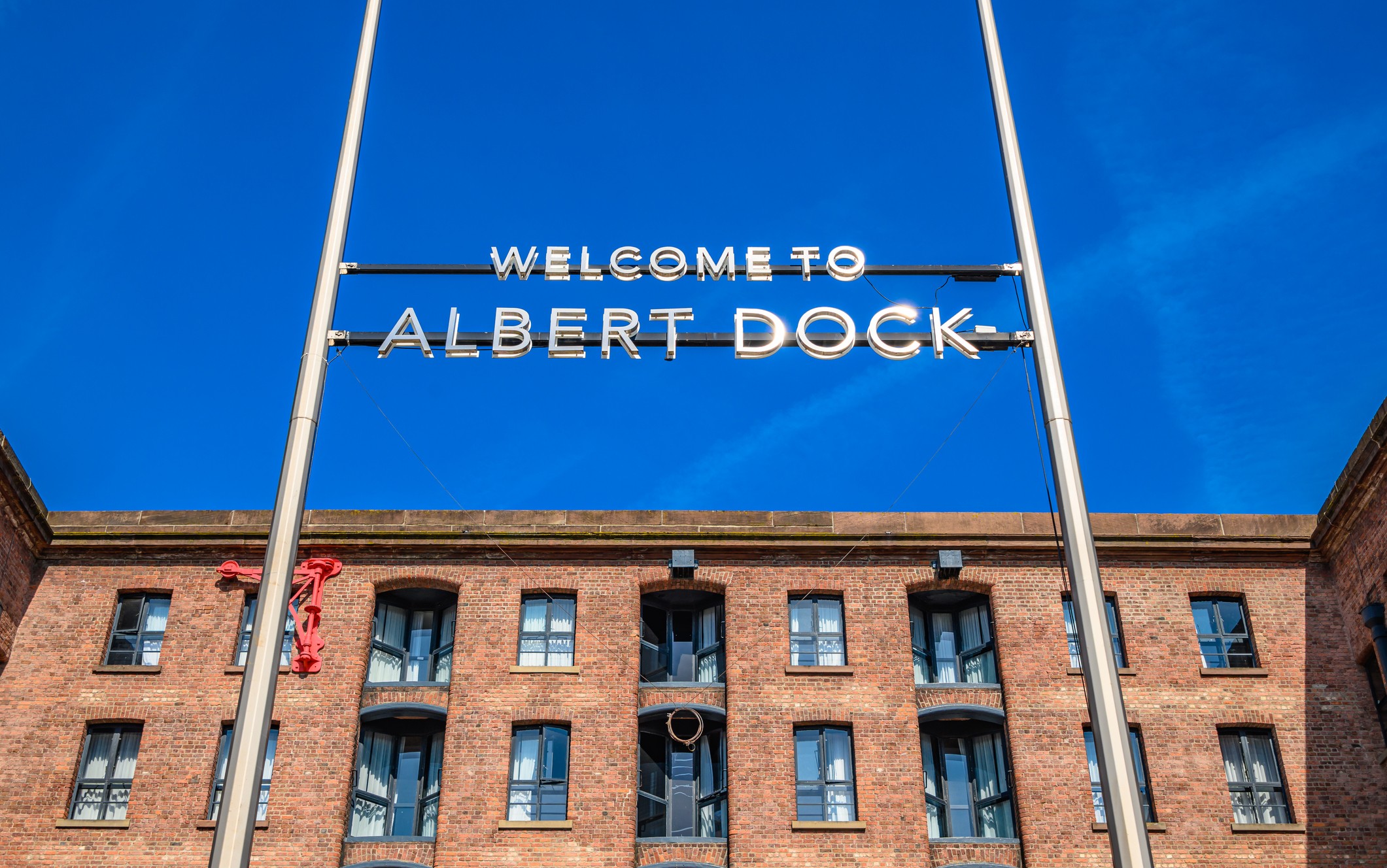 Image: The Royal Albert Dock, originally opened on 30 June 1864
The Liverpool and Manchester Railway opened on 15 September 1830, becoming the world’s first intercity railway. Regular train services still operate along this historic route, connecting Liverpool Lime Street to Manchester. The journey covers approximately 31 miles (50 km) and typically takes approximately 50 minutes; faster express services complete the journey in about 35 minutes.
In the 20th century, Liverpool became internationally famous for its music, particularly through The Beatles who emerged as the brightest stars of the city’s Merseybeat scene in the 1960s. The city is also home to two major football clubs, Liverpool FC and Everton FC.
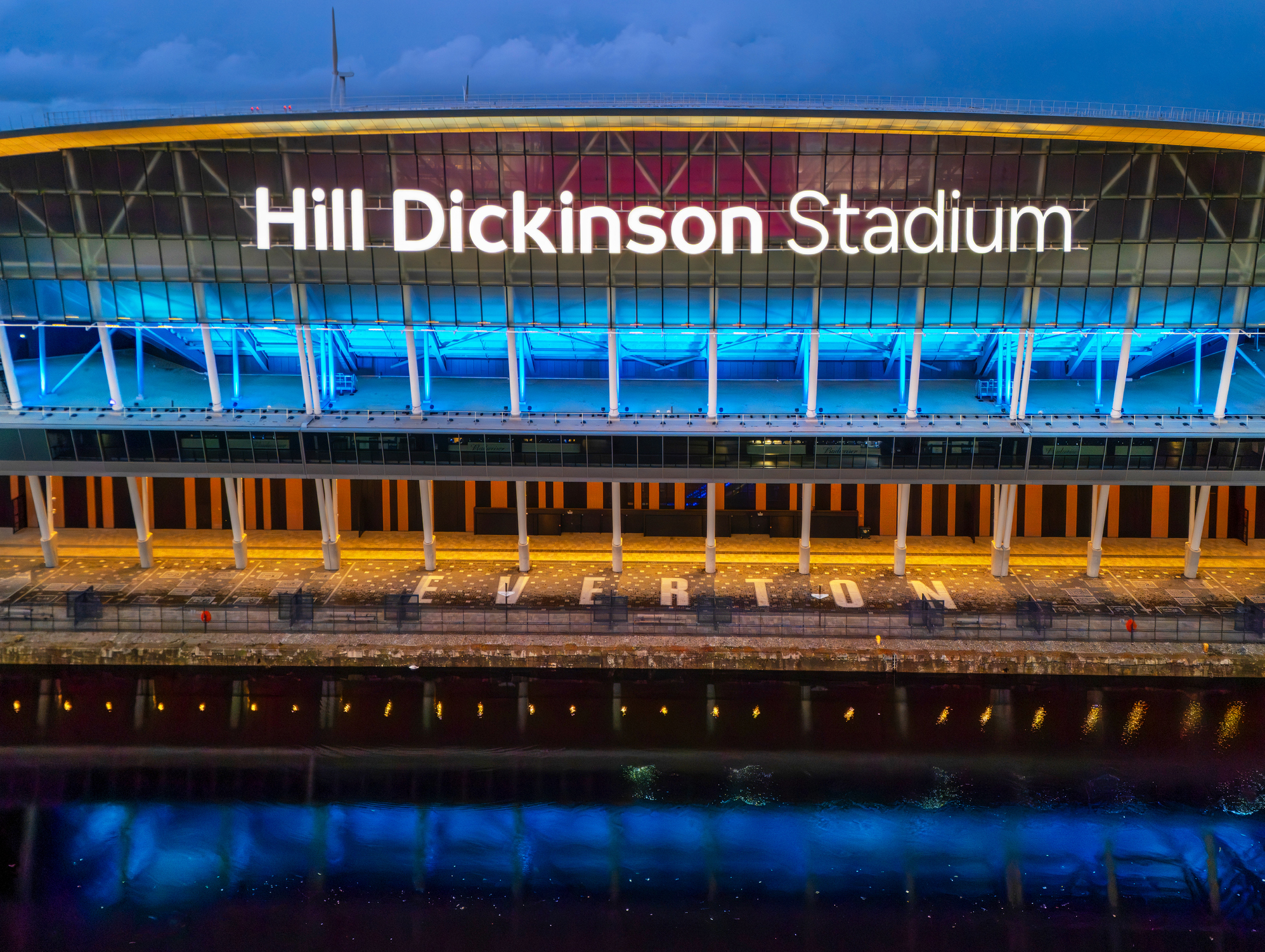 Image: The Hill Dickinson Stadium, home of Everton FC
The city suffered economically after the Second World War as traditional industries declined and new containerisation technologies transformed shipping. However, in recent decades the city has experienced major regeneration. In 2008, Liverpool was named European Capital of Culture, helping to strengthen its reputation as a centre for arts, tourism, and culture.
Liverpool is home to a rich ecosystem of national and local museums, galleries and other cultural institutions, including Tate Liverpool, Museum of Liverpool, Merseyside Maritime Museum, World Museum, Walker Art Gallery, International Museum of Slavery, RIBA North, Liverpool Central Library, Liverpool Philharmonic, Liverpool Playhouse & Everyman Theatres, Baltic Creative, FACT Liverpool, Liverpool Biennial and Open Eye Gallery.
Two cathedrals, Liverpool Anglican Cathedral and Liverpool Metropolitan Cathedral, dominate the eastern skyline of the city centre, sitting either end of a street named Hope.
Leading local academic institutions, offering higher education, include the University of Liverpool, Liverpool John Moores University, Liverpool Hope University and Liverpool Institute for Performing Arts (LIPA).
The city also has historic parks and recreational spaces which are among the best in the UK. Particularly noteworthy are Sefton Park, Formby and Crosby Beach, home of Another Place by renowned artist Antony Gormley.
Geographic Coordinates
Latitude, Longitude: 53.4106, -2.97794
Population
Approximately 507,900; over 1.5 million in wider metropolitan region.
Currency
GBP (Pound)
Sources
VisitLiverpool, National Museums Liverpool, Liverpool City Council, Culture Liverpool, Britannica, Historic England, National Trust, Wikipedia, UNESCO, Office for National Statistics